Water Heater Repair in Ridgewood, Queens
Expert diagnostics for no hot water, inconsistent temperatures, pilot ignition problems, and leaking tanks across all types of domestic water heating equipment.
Call (315) 202-8009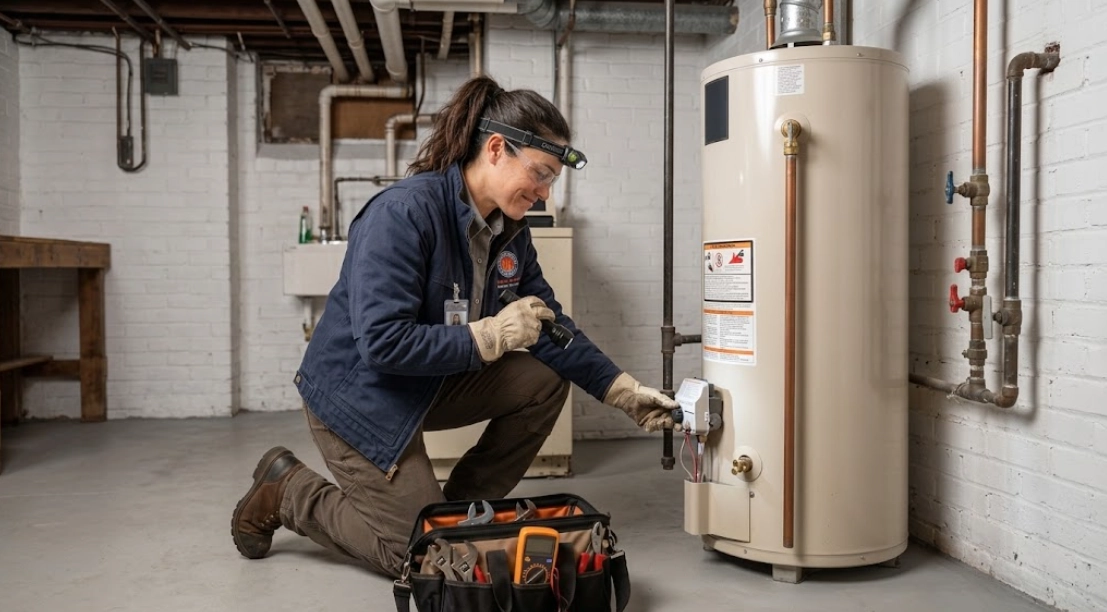
Home > Water Heater Repair
Restoring Domestic Hot Water
A sudden loss of hot water is incredibly disruptive. In Ridgewood, domestic hot water is generated in several different ways. Many homes use standalone, gas-fired atmospheric water heaters. Others use electric units, while multi-family buildings often rely on "indirect" water heaters that draw their thermal energy directly from the main boiler. Accurately diagnosing a hot water issue requires an understanding of how these different systems are integrated into your home's infrastructure.
Diagnosing Ignition and Heating Failures
For gas-fired water heaters, the most common service calls involve a lack of hot water due to pilot light failures or burner issues. The thermocouple, a small safety device that monitors the pilot flame, frequently degrades over time. If it fails, the gas valve shuts down to prevent a dangerous gas leak. We test the gas train, the thermocouple, the electronic ignition (on modern units), and the thermostat controls. If you have an electric water heater, we test the upper and lower heating elements and thermostats to ensure they are drawing the correct voltage and cycling properly.
Addressing Leaks and Sediment Accumulation
Over years of continuous use, minerals and sediment from the municipal water supply settle at the bottom of the water heater tank. This sediment acts as an insulator, forcing the burner to work significantly harder to heat the water. This overheating ultimately weakens the steel tank, leading to internal corrosion. If a water heater begins leaking from the tank itself—rather than from a removable fitting or the temperature and pressure (T&P) relief valve—the unit cannot be repaired and must be replaced.
The Repair vs. Replacement Decision
When evaluating a water heater, we consider its age, overall condition, and the nature of the failure. Minor electrical components, gas valves, and relief valves are straightforward repairs. However, if an older tank shows severe rust, internal leaking, or is significantly past its manufacturer warranty, investing in a replacement is safer and more cost-effective than repairing a unit on the brink of catastrophic failure.
Frequently Asked Questions
Why does my hot water run out so quickly?
This usually indicates that the dip tube (which directs incoming cold water to the bottom of the tank) is broken, or that one of the heating elements in an electric unit has failed. It can also be caused by heavy sediment displacement reducing the tank's actual water volume.
Is it safe to turn the water heater temperature all the way up?
No. Setting the temperature too high poses a severe scalding risk, especially in homes with young children or elderly residents. The recommended safe setting is generally 120°F.
What is an indirect water heater?
An indirect water heater is a highly insulated storage tank without its own burner. It relies on hot water circulated from your main space-heating boiler to heat the domestic water through an internal coil. If an indirect tank is cold, the problem may actually reside with the boiler's zone valve or circulator pump.
If the issue stems from the building's main heating system, please see our Boiler Repair page. To confirm we service your neighborhood, visit our Service Areas.